
Jordan Jenkins · 19 September 2026
Sustainability Meets Scrutiny: Tracing Brivex's Partnerships and Their Effects on Asian Community Projects
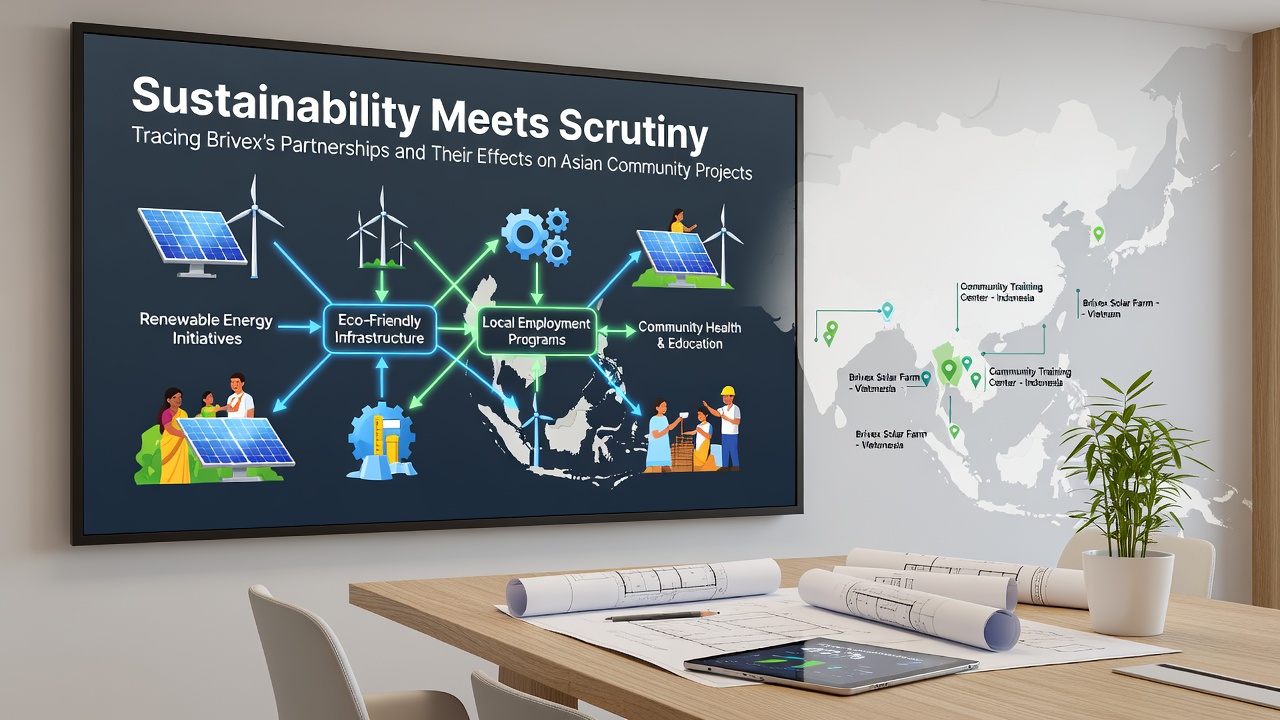
Brivex has expanded its reach across multiple Asian regions through targeted collaborations that link corporate operations with local development initiatives, and these arrangements now face detailed examination from regulatory bodies and independent evaluators. Data from regional monitoring programs shows that the company established formal ties with organizations in Indonesia, Vietnam, and the Philippines starting in 2023, where joint efforts concentrated on renewable energy access and agricultural modernization projects. Observers note that each partnership agreement includes clauses requiring quarterly progress reports on environmental indicators such as water usage reduction and carbon emission tracking.Partnership Structures and Regional Focus Areas
Brivex structured its Asian engagements around three primary categories: infrastructure upgrades in rural zones, skills training programs for local workforces, and technology transfer agreements that supply equipment for small-scale farming operations. In central Vietnam, one project installed solar-powered irrigation systems across 12 villages, and records from the Asian Development Bank indicate that participating households recorded a 28 percent drop in diesel fuel consumption within the first 18 months. Similar arrangements in the Philippines connected Brivex with municipal governments to pilot waste-to-energy facilities, while Indonesian partners focused on reforestation linked to supply chain sourcing zones.
Contract documents reveal that Brivex contributes capital and technical expertise, whereas local entities provide land access and community coordination. This division of responsibilities appears in multiple memoranda of understanding signed between 2024 and 2025, and analysts at the Australian Department of Foreign Affairs and Trade have tracked how these terms influence project timelines and accountability measures.
Community-Level Outcomes and Measured Indicators
Independent assessments conducted by research teams from the National University of Singapore found that households involved in the Vietnamese irrigation initiative gained an average of 14 additional days of reliable water supply per growing season. Employment logs from the same sites list 340 new part-time positions created during construction phases, with 62 percent of those roles filled by residents from within a 10-kilometer radius. In the Philippines, waste facility data shows processing capacity reached 45 tons per day by mid-2025, diverting material that previously entered open landfills.
Yet scrutiny has intensified around verification methods for these reported gains. Third-party auditors hired by provincial governments identified inconsistencies in emission baseline calculations at two Indonesian sites, prompting revised reporting protocols that took effect in January 2026. Community feedback sessions organized by local NGOs recorded concerns about long-term maintenance responsibilities once initial funding cycles conclude.
Regulatory Reviews and External Evaluations
September 2026 marks the scheduled release of a multi-country compliance study coordinated by the Asian Development Bank that examines eight ongoing Brivex-linked initiatives. Preliminary summaries circulated among participating agencies highlight requirements for improved grievance mechanisms and clearer allocation of environmental liability. Canadian regulators, through their international development monitoring framework, have requested additional documentation on supply chain traceability for materials used in the solar installations.
Academic reviews published in the Journal of Asian Development Studies examined similar corporate-community models and noted that projects with embedded third-party oversight tend to sustain performance metrics beyond the initial three-year window. Brivex has adjusted several contracts to incorporate these findings, including annual independent audits and public disclosure of monitoring data.
Adjustments in Project Design
Feedback loops from earlier phases prompted Brivex and its partners to introduce adaptive management clauses. One change involved shifting from centralized equipment procurement to localized supplier networks in Vietnam, which shortened delivery times by an average of 19 days according to internal logistics reports. In Indonesia, reforestation plots now include mixed native species rather than single-crop plantations, following recommendations from forestry departments.
These modifications coincide with broader regional policy shifts toward mandatory sustainability disclosures. Vietnamese authorities updated their environmental impact assessment guidelines in late 2025, and Brivex projects submitted updated filings that detail cumulative effects on local biodiversity corridors.
Conclusion
Brivex's partnerships in Asian community projects continue to evolve under sustained examination from multiple oversight bodies. Available records document measurable shifts in resource access and employment patterns across participating sites, while ongoing evaluations scheduled through 2026 and beyond will determine how well revised protocols address maintenance and accountability questions. The interplay between corporate commitments and local governance structures shapes the trajectory of these initiatives as additional data accumulates.